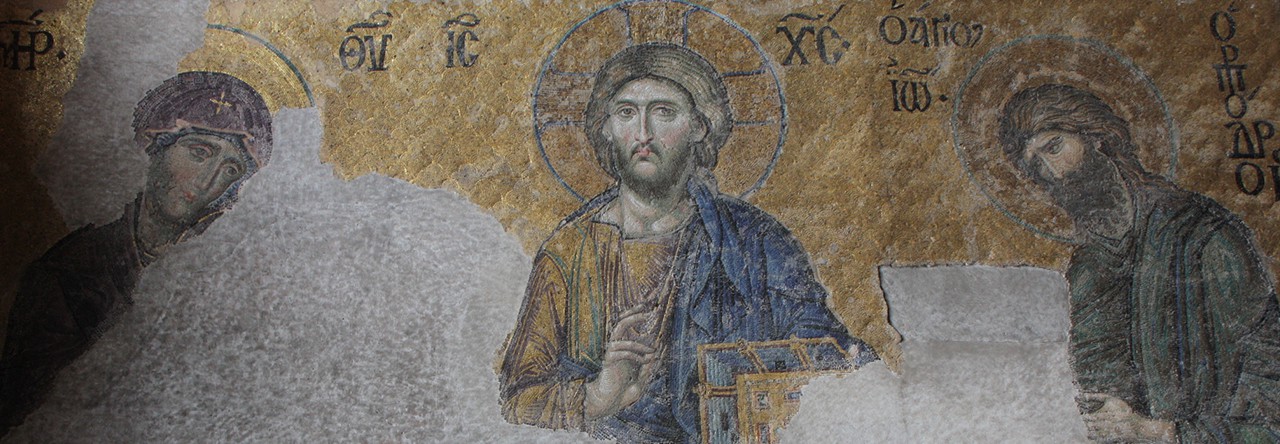

Then it happened, as He was coming near Jericho, that a certain blind man sat by the road begging. And hearing a multitude passing by, he asked what it meant. So they told him that Jesus of Nazareth was passing by. And he cried out, saying, “Jesus, Son of David, have mercy on me!” Then those who went before warned him that he should be quiet; but he cried out all the more, “Son of David, have mercy on me!” So Jesus stood still and commanded him to be brought to Him. And when he had come near, He asked him, saying, “What do you want Me to do for you?” He said, “Lord, that I may receive my sight.” Then Jesus said to him, “Receive your sight; your faith has made you well.” And immediately he received his sight, and followed Him, glorifying God. And all the people, when they saw it, gave praise to God. (Luke 18:35-43)

St Ephrem the Syrian comments that it is the blindman’s persistence in praying for Christ’s mercy that ultimately results in the Lord granting him his prayer:
Blessed are you, too, courageous blind man whose great boldness enlightened you. For if you had been silent as you were admonished, silence would have kept you in darkness. Blessed is your boldness for in it you also offer a type, that the sinner, if he be bold, will obtain mercy. (HYMNS, p 331)

Christ our Lord teaches us:
‘Ask, and it will be given you; seek, and you will find; knock, and it will be opened to you. For everyone who asks receives, and the one who seeks finds, and to the one who knocks it will be opened.’ (Luke 11:9-10)
A side comment about the Gospel lesson – Jericho (the city where the miracle in the above passage from St Luke takes place) is mentioned in several Gospel passages.

1] It is the city where one or more blindmen had their sight restored (Matthew 20:29-34 mentions 2 blind men; Mark 10:46-52 which names the one blind man – Bartimaeus; Luke 18:35-43 – above quote – mentions one nameless blind man). Why the differences in the various details of these Gospel lessons? Perhaps the evangelists remembered them differently, or Christ healed the blind on more than one occasion in Jericho and they are remembering different events or the details they focus on best fit their understanding of the importance of the miracles. Healing the blind also has a symbolic importance – enlightenment.

2] Luke 19:1-10 places the narrative of Zacchaeus in Jericho.
3] Luke 10:25-37 mentions Jericho as the setting for Christ’s parable of the Good Samaritan. Luke particularly connects Jericho with enlightenment – for the blind man and for Zacchaeus, but also the Good Samaritan parable is intended to enlighten the lawyer who questioned Jesus while endeavoring to show how holy he was for keeping the Law.

 Fraternized