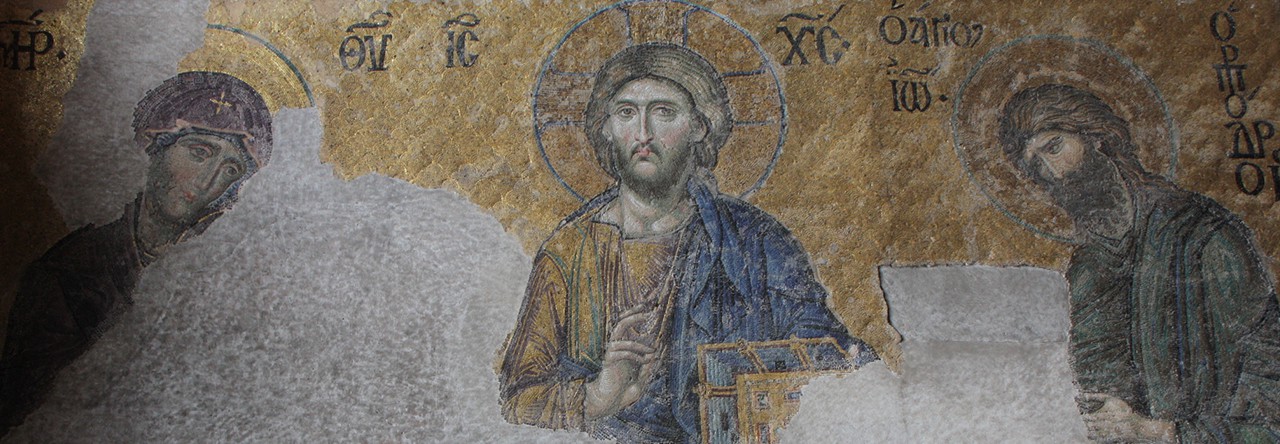

One of the changes that happened in Orthodoxy through its long history is an understanding of Church Feasts. Originally, the Church kept the big picture of God’s salvation of the cosmos as the context in which to understand every Feast. Each Feast affirmed the one truth of God’s salvation of humanity. Over time, as the Church celebrated Feasts annually, the entire year came to be seen as a drama celebrating the separate events in Christ’s life – the Feasts came to be understood as a series of unique historical events. Annually, on each Feast, the Church commemorated one episode in Christ’s 33-year-long life and that episode was a piece of the big picture. What changed was that instead of each Feast being another experience of God coming from the vastness of His Kingdom into the world, the Feasts became separated episodes of the life of Christ celebrated through a year-long “passion play” of sorts. The various human details in each Feast became the main focus of interest.

Originally, each feast celebrated God’s love for us and all of them allowed us to experience God’s salvation for the cosmos. The Nativity of Christ shows God’s love for us and is a celebration of His saving us. Holy Friday shows God’s love for us and is a celebration of His saving us. Pascha shows God’s love for us and is a celebration of His saving us. All that happened in Christ’s life was for our salvation and a sign of God’s love. However, when the Church began to see Christ’s life as a series of chronological episodes, each Feast took on exclusive importance. People began to love the Feasts, creating unique celebrations for each and then looking forward to those celebrations. For example, the carols at Christmas end up celebrating Christmas itself – the details of the events surrounding Christ’s birth (manger, shepherds, angels, star, wonder) were sentimentalized as well as the current ways we celebrate it (trees, gift giving, winter weather, family). The particular festivities of each Feast became what we look forward to. The Feast as a sign of God’s love for us and offering us a way to experience salvation drifted into the background of popular piety.

Factually, all Feasts are signs of and point to the same reality – how God is changing His relationship to all of us sinners in the world. The Feasts are a way to show everyone (believer or not) that God loves them and wants them to be united to Him.

The significance of the incarnation can be lost amidst the festivities – God enters into time and transforms time itself. Christmas is not a one-off event, a one-time episode to be celebrated only on December 25 but then forgotten until the next year. The reality of the incarnation is that it is to be celebrated in every Feast as well as any day of the year because it has transfigured time. When we make the Nativity Feast into a one-off event, we lose sight of God entering into time itself which is what connects every moment of our lives to God, eternity and our salvation.

For Christians, every day is related to Christmas and to Pascha (and to all other feasts and sacraments). We distort our faith when we make those days so sacred, so special, so unique, that we don’t think about them all the days of our lives but only once each year. Through the incarnation God enters into time, it is also a ‘desacralization’ of time because now instead of one day of the year being about the Nativity of the Lord and another day being about His resurrection, now all days are about God being present in our lives and in the world. We experience eternal salvation in time every day of our lives. Christmas in December. Christmas in July. Christmas in Great Lent and Holy Week. Even in Advent, we don’t pretend Christ is not yet incarnate for every season and each day is filled by the incarnation.

 Fraternized