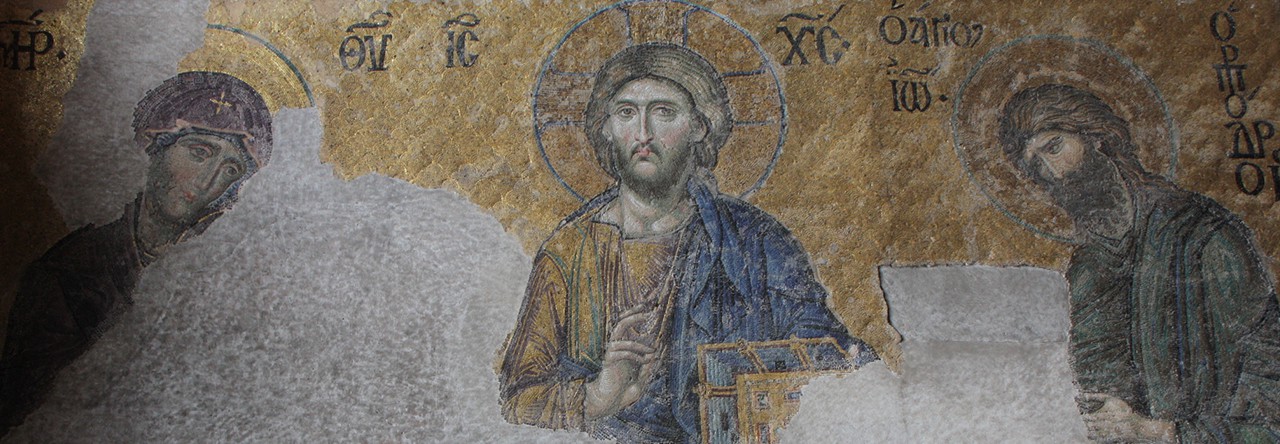

Then the King will say to those at his left hand, ‘Depart from me, you cursed, into the eternal fire prepared for the devil and his angels; for I was hungry and you gave me no food, I was thirsty and you gave me no drink, I was a stranger and you did not welcome me, naked and you did not clothe me, sick and in prison and you did not visit me.’ (Matthew 25:41-43)
When we hear about the Last Judgment often, we often think about the righteous God judging us for our sins – for each time we broke one of His commandments. For example, in the desert fathers we find this story:

A brother asked Abba Poemen: ‘What am I to do?’ The elder said to him: ‘At the time of God’s visitation, what do we have to worry about?’ ‘About our sins,’ the brother said to him, so the elder said to him: ‘Let us then go into our cells and remaining there, let us recall our sins – and the Lord will go along with us in everything.’ (GIVE ME A WORD, p 254)

Abba Poemen provides a typical monastic response to the impending Judgment Day – we should constantly remind ourselves of our sins, repent and then trust in the mercy of God. However, when we encounter Christ’s parable of the Last Judgment, we are confronted by a different reality – we will be judged not for our breaking God’s commandments but for our failure to love others. This is certainly because Christ taught that all the commandments can be summed up as:
You shall love the Lord your God with all your heart, and with all your soul, and with all your mind. This is the great and first commandment. And a second is like it, you shall love your neighbor as yourself. On these two commandments depend all the law and the prophets.” (Matthew 22:37-40; see also Galatians 5:14 and 2 John :6).

With those New Testament teachings in mind, we can appreciate St John Chrysostom’s take on who will be condemned at the Last Judgment based on Christ’s parable – those who failed to love others. He writes:
Note how simple are his requirements: he did not say, I was in prison and you freed me, I was sick and you put me on my feet, but ‘You visited me, you came to me.’ Not even in the case of hunger, in fact, is the direction demanding: he was not requesting a lavish banquet, only what is necessary, basic nourishment, and he requested it as a suppliant.

. . . and here he says, ‘Just as you did not do it to one of the least of my brethren, you did not do it to me.’ Why do you say, ‘my brethren’? How is it you call them ‘least’? Brethren for this reason, that they are lowly, that they are poor, that they are outcast: such people in particular he invites to brotherhood, the unknown, the contemptible, referring not just to the monks and those that occupy the mountains, but to every believer, secular or not, as long as they are hungry and thirsty, naked and a stranger – he wants them to receive this care fully. (SPIRITUAL GEMS FROM THE GOSPEL OF MATTHEW, pp 149-150)
 Fraternized